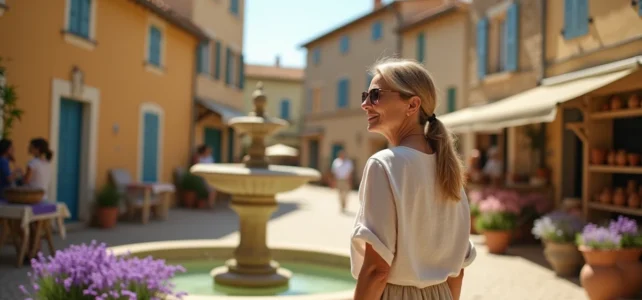
Fuveau can be spotted from afar thanks to its bell tower planted on a ridge, between the Garlaban massif and the Sainte-Victoire mountain. This Provençal village in the Bouches-du-Rhône now has just over 10,000 inhabitants and continues to grow, supported by a preserved natural environment and direct proximity to Aix-en-Provence.
Before detailing its heritage or festivals, one aspect deserves attention: the way the local real estate market reflects the village’s attractiveness and gradually alters its social fabric.
Real Estate Market in Fuveau: A Provençal Village Under Pressure
You may have noticed that some Provençal villages have square meter prices worthy of small towns? Fuveau is one of them. The median price reaches 4,548 euros per square meter over the last 24 months, according to DVF/CEREMA data.
This price level is explained by a strategic geographical positioning. Bus lines 170 and 172 connect the village to Aix-en-Provence, Gardanne, and Gréasque. The A8 motorway is accessible in just a few minutes. New developments, such as “Les mas du Roucaoudo” developed by Cogedim, directly target professionals working in the metropolis who seek a quieter living environment.
The official population as of January 1, 2024, is 10,115 inhabitants (INSEE census, vintage 2021). Estimates for 2026 point to 10,430 inhabitants. This ongoing demographic growth fuels the demand for housing and services, gradually transforming local life without the village losing its Provençal character.
Built Heritage of Fuveau: What the Stones Tell
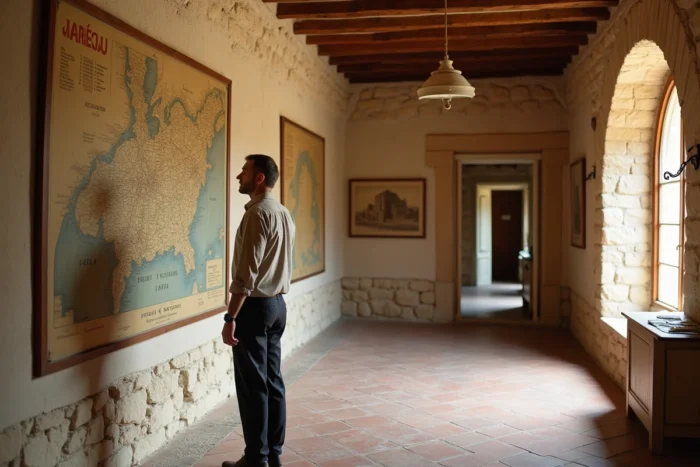
The old village can be explored on foot in less than an hour, but each alley holds an architectural detail that anchors Fuveau in several centuries of history.
The 11th Century Saint-Michel Chapel
This is the oldest monument in the municipality. Listed as a historical monument, this Romanesque chapel bears witness to the medieval settlement on the hill. Its architectural simplicity contrasts with the 19th-century Saint-Michel church, located in the center of the village, which today serves as a visual landmark for both residents and visitors.
Traces of Medieval Fortifications
The Bassac gate is the only remnant of the ramparts that protected the village. It marks the entrance to the former fortified town. Continuing the walk, one encounters an old washhouse, a restored dovecote, and the remains of a windmill, all elements that depict the daily life of a Provençal agricultural village between the Middle Ages and the Renaissance.
A Panorama That Inspired Painters
From the top of the village, the view extends to Sainte-Victoire, Sainte-Baume, Olympe, and Aurélien. This 360-degree panorama explains why Fuveau is often presented as an alternative viewpoint on the landscapes that Cézanne painted from Aix. The south-facing orientation bathes the facades in light that changes dramatically between morning and late afternoon.
Events and Festivals in Fuveau: The Calendar That Animates the Village
Classic tourist pages rarely list the most recent events. Here are those that structure local life in 2025 and 2026.
- “En avant guinguette” on June 27: pétanque, live music, and Provençal flavors in a neighborhood festival atmosphere. A friendly format that also attracts residents from neighboring municipalities.
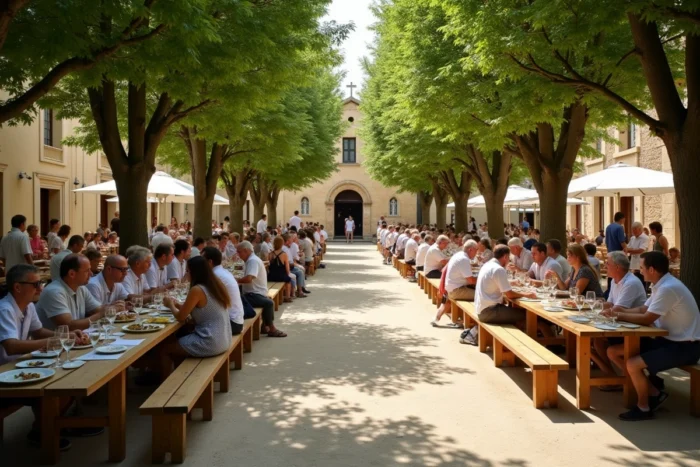
- Village Festival on July 10-11, 2026: a highlight of the summer, this festival brings together the Fuvelains (the official demonym) around stalls, activities, and shared meals. It traditionally takes place in the central square.
- The European Heritage Days in September open places usually closed to the public and offer guided tours of old Fuveau led by local history enthusiasts.
These events are not just simple tourist attractions. They play a role in fostering cohesion in a community that welcomes new residents each year. For families who have recently settled, the village festival often remains the first moment of meeting with the neighbors.
Daily Life in Fuveau: Between Rural Provence and Suburbia
Fuveau is neither a museum village nor a residential suburb. Its identity lies precisely in this tension between two realities.
On the traditional Provence side, life is organized around the old center. Local shops, the market, and cafés in the square perpetuate a Mediterranean rhythm. The surrounding hills, covered with garrigue and pine forests, offer hiking trails accessible directly from the village.
On the suburban side, demographic growth is evident in the housing developments that extend towards the main roads. The profile of newcomers has evolved: many are commuters who work in Aix or Marseille and return home in the evening. This duality is reflected in local discussions about urban planning, traffic, and the preservation of agricultural land.
What makes Fuveau endearing is precisely this fragile balance. The village is growing without having (yet) slipped into the anonymity of standardized housing areas. The built heritage and local festivals serve as an identity cement in the face of unrelenting demographic pressure.
For those considering moving there or simply spending a day, Fuveau is best discovered on foot, starting with the old village early in the morning, when the low light highlights the ochres of the facades and the alleys are still calm.