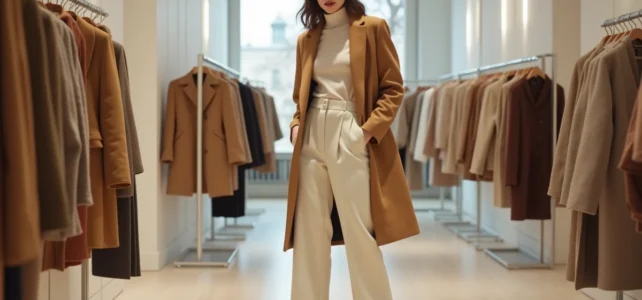
The French clothing market is experiencing a decline in store traffic and a decrease in sales volume compared to 2019. In this context, following fashion trends without contributing to textile overproduction has become both a technical and aesthetic challenge. We observe that pieces that last through multiple seasons share specific characteristics in construction, material, and modularity.
Technical criteria for a truly sustainable fashion piece
A fashion trend is only valuable if the garment that embodies it stands the test of time. We recommend evaluating each piece on three axes before purchase: weaving density, seam quality, and component replaceability.
The weaving can be assessed by sight and touch. A fabric that is too thin allows light to pass through when held up to a light source. Double or overlocked seams at stress points (armholes, crotch, collar) indicate a construction designed to last.
Component replaceability remains the most overlooked criterion. A zipper sewn onto a separate tape can be replaced by any tailor. A heat-bonded zip directly on the fabric condemns the entire garment. Riveted buttons on jeans are repairable, while snap buttons set on fine polyester are not.
- Check for sufficient seam allowances (at least one centimeter) to allow for future alterations and adjustments
- Prefer single-fiber materials (cotton, linen, wool) that can be repaired, dyed, and recycled much more easily than synthetic blends
- Identify pieces with removable linings or detachable decorative elements, which extend the overall lifespan of the garment
Several online resources compile analyses of this type, including the BestWeb site dedicated to fashion, which lists brands according to their manufacturing practices and transparency.
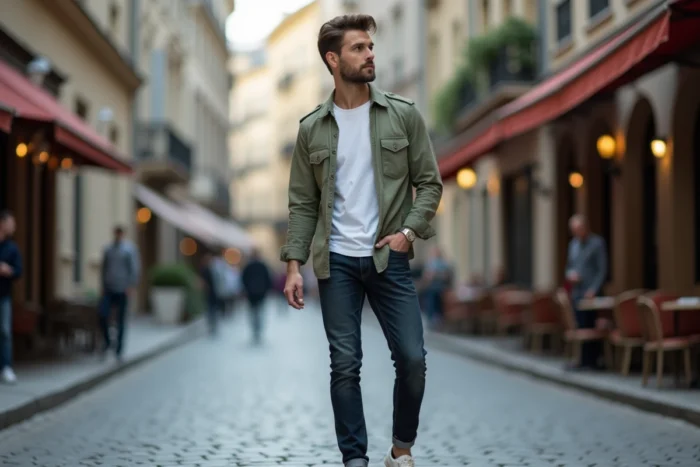
Spring-Summer 2026 trends compatible with a circular wardrobe
Wide and structured silhouettes dominate the 2026 collections, which is good news for sustainability. A wide linen or thick cotton pant accommodates variations in body shape over several years. A slim pant made of elastane loses its shape after a few dozen washes.
The return of natural tones (beige, ecru, washed khaki) and butter yellow makes it easier to mix and match pieces from different seasons. These colors transcend fashion cycles without appearing dated, unlike neon shades or heavily patterned prints that become temporal markers within months.
High rotation potential pieces
The unlined oversized cotton canvas blazer can be worn from spring to fall, open over a t-shirt or closed as a light jacket. Its simple construction makes it easy to alter (shorten sleeves, adjust shoulders).
The thick poplin shirt dress works as a complete outfit or as an open overshirt over pants. This is exactly the type of piece that justifies an investment higher than the price of ultra fast fashion, as it serves multiple functions in the wardrobe.
The short trench coat is returning to collections, and its version in cotton gabardine (without plastic coating) remains repairable and machine washable for years. We avoid coated polyester versions that crack after two seasons.
Regulating ultra fast fashion in France: what it means for consumers
France has adopted legislation specifically targeting ultra fast fashion. This legislation includes the prohibition of advertising for ultra-fast fashion players, graduated penalties, and environmental fines. For consumers, this means a gradual reduction in the visibility of these brands in the French advertising space.
The concrete impact can be measured in terms of pricing. Environmental fines increase the cost of very low-priced pieces produced in massive volumes. The price gap between an ultra fast fashion piece and a mid-range piece made under more traceable conditions is mechanically narrowing.
This regulatory framework gives an advantage to brands that invest in eco-design, reducing the number of references per season, and offering take-back or repair services. Second-hand and clothing rental also benefit from this redistribution, as they are not subject to the fines.
Circular fashion: take-back, repair, rental
Circular fashion is no longer just a marketing discourse but an infrastructure under construction. Take-back services are multiplying among mid and high-end retailers. Textile repair, long confined to local tailors, is now the subject of structured programs by some brands that provide spare parts and tutorials.
Clothing rental is growing in the segment of event pieces (ceremony dresses, evening outfits) where the cost per wear of a new purchase is hard to justify. For everyday style, the model remains less relevant than the thoughtful purchase of modular pieces.

Building a trendy look with fewer pieces per season
Reducing the number of pieces purchased each season does not mean giving up on trends. It requires selecting clothing that fulfills multiple stylistic roles.
- A wide thick canvas pant replaces both the casual weekend jean and the dress pant for the office depending on the chosen shoes and top
- A short colored jacket (the return of spring 2026) adds a seasonal pop of color without multiplying printed tops
- A thick cotton round-neck t-shirt, in white or ecru, serves as a neutral base for all layering and is easily replaceable when worn out
Three to five well-chosen pieces per season are sufficient to refresh an existing wardrobe. The rest of the work is done through accessories (belt, bag, shoes) and combinations of already owned pieces.
The real stylistic lever is not in the volume of purchases but in the compatibility between pieces. A wardrobe where each top works with each bottom multiplies the possible outfits without adding volume to the closet. This calculation, more than any seasonal trend, defines a truly sustainable style.