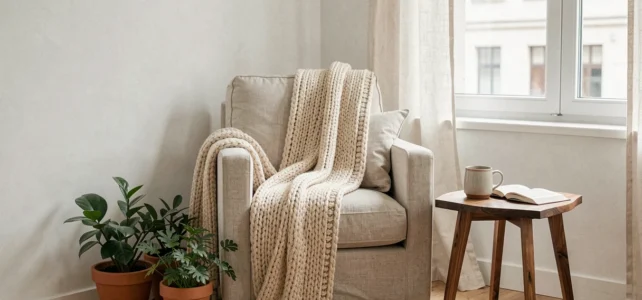
A cozy interior is based on a simple technical principle: visually reducing the hardness of surfaces and multiplying tactile contact points in each room. It’s not about a unique style, but about balancing materials, light, and colors that work together to enhance the perception of comfort. Transforming your home into a warm space requires a few precise choices, not a catalog of accessories.
Soft architecture: transforming volumes without renovations
The trend soft architecture, which has emerged since 2024-2025 in decorators’ vocabulary, changes the way we approach a cozy interior. The principle is to visually soften rigid elements (walls, door frames, sofas) with softer, tactile surfaces or rounded shapes.
Specifically, this involves enveloping headboards that rise high on the wall, more generous sofa backs, or matte velvety effect paints that “blur” the perception of a raw wall. The major advantage of this approach: everything remains reversible and compatible with a modest budget.
A bedroom wall covered with a stretched textile panel gives a “padded” effect without putting a single screw into the partition. Structuring cushions placed on the floor along a hallway transform a cold passage into a nook. To delve deeper into these approaches and find complementary ideas, it’s useful to consult Dekortikon for the home before making material choices.
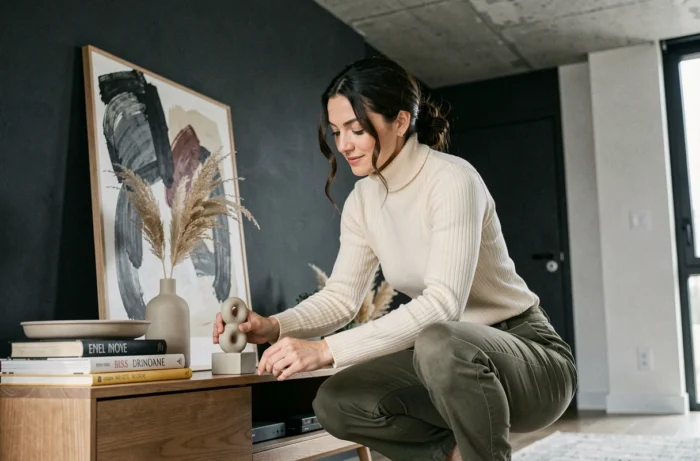
Cozy color palette: earth tones replace cold grays
Contemporary cozy palettes have evolved significantly. The cold grays that dominated interiors since the 2010s are giving way to earthy and plant-based hues: terracotta, warm beige, stone tones, sage green, midnight blue, tobacco brown.
This transition is not cosmetic. Deep, warm colors absorb more light and reduce harsh reflections, altering the thermal perception of a room. A living room painted in sage green feels more enveloping than a white living room, even at the same temperature.
Combining deep colors in a living room or bedroom
The most reliable rule for a cocooning effect without error: limit the palette to a maximum of three tones per room. A deep color accent wall (earthy eggplant, midnight blue), a dominant warm neutral (beige, cream), and a textile reminder in a third natural shade.
- Terracotta works well as wall paint, bed linen, or decorative pottery, allowing for gradual introduction without repainting
- Sage green pairs with light wood and raw linen materials, a very effective combination for a calming bedroom
- Midnight blue, applied to a single wall behind a sofa, creates depth that visually enlarges the space while making it more intimate
Lighting and materials: the two levers that change an ambiance
Artificial light is the most underestimated lever in cozy decoration. Poorly thought-out lighting negates the effect of any warm palette. A central ceiling light alone produces flat light that flattens textures and hardens shadows.
The effective method is to multiply low sources: table lamps, discreet garlands, wall sconces directed towards the ceiling. Each light point should be below eye level when seated. This arrangement creates soft shadow areas that enhance the feeling of enveloping.
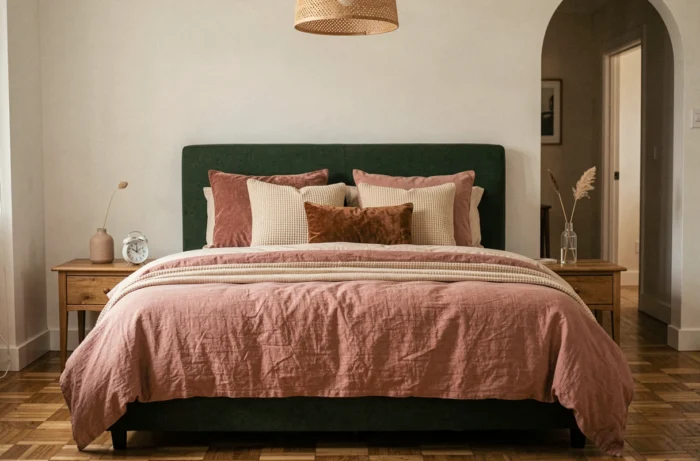
Layering textiles for a cocoon effect
Textile layering is not just about stacking cushions on a sofa. The principle relies on contrasting textures: a smooth material against a textured one, a heavy fabric against a light one.
- A thick wool blanket placed on a smooth velvet sofa creates an immediate tactile contrast, more effective than two similar materials
- A jute rug under a coffee table, combined with a softer rug under the sofa, delineates areas and adds warmth to the floor
- Thick linen curtains that reach the floor soften windows and improve acoustic insulation, a benefit often overlooked
- Raw or lightly oiled wood (shelves, trays, frames) adds an organic texture that breaks the monotony of painted surfaces
Cocooning decoration: creating micro-spaces in each room
A cozy interior works best when it contains distinct areas rather than a uniform space. Each room benefits from having at least one “corner” dedicated to relaxation, even in a small apartment.
An armchair placed at an angle with a table lamp and a small side table creates a functional reading nook. This type of arrangement requires neither extra square meters nor expensive furniture. The key is the proximity of elements: the armchair, the light, and the surface must be accessible without getting up.
In a bedroom, the same principle applies with a bench under the window or a foot of the bed filled with cushions. These micro-spaces send a clear visual signal: here, we slow down. They function as landmarks in the overall layout and give each household member an identified place to settle.
The difference between a trendy interior that seems cozy and a truly comfortable one often lies in this detail. Colors and materials set the mood, but it is the micro-spaces that make a place livable on a daily basis. A sofa alone facing a screen is not enough to create a cocoon. Several anchor points distributed throughout the home, each with its own light and textures, transform a dwelling into a refuge.