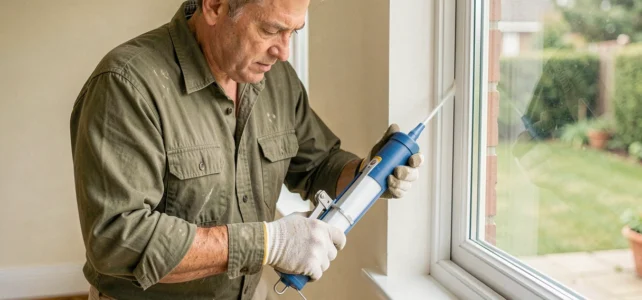
You are resealing the joint around a PVC window and are hesitating between a cartridge of silicone and a sealant. The two products look similar on the shelf, are applied with the same gun, and both promise good sealing. The choice comes down to specific criteria: the material of the substrate, the exposure of the joint, and what you plan to do with it after installation.
Acetoxy silicone on PVC window: a questionable adhesion
Acetoxy silicone is the most common in stores. It polymerizes by releasing acetic acid (the characteristic vinegar smell). On glass or tiles, it adheres very well. On PVC, the situation is different.
PVC is a material with low surface energy. In simple terms, products have difficulty “sticking” to it. A standard acetoxy silicone may hold for a few years, then start to peel in places, especially if the joint undergoes thermal movements (expansion of the frame in summer, contraction in winter).
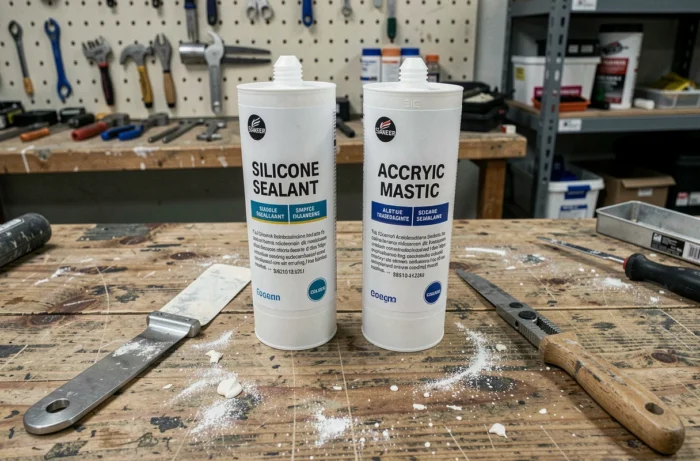
To understand the sealant for PVC windows and its variants, you first need to distinguish the chemical families: acetoxy silicone, neutral silicone, acrylic sealant, polyurethane sealant, and hybrid MS polymer sealant. Each reacts differently when in contact with PVC.
Neutral silicone adheres better to PVC than acetoxy silicone. It does not release acid during drying, making it compatible with more substrates, including metals and plastics. If you prefer silicone, opt for a neutral silicone specially designed for carpentry.
Hybrid MS polymer sealant on PVC: the game-changing product
Hybrid sealants based on MS polymers are increasingly used in carpentry. Their particularity: they adhere to PVC, aluminum, glass, and wood, often without a primer. A simple cleaning of the surface (and sometimes an activation wipe) is enough to achieve durable adhesion.
Have you noticed that silicone joints cannot be painted? This is one of the major drawbacks of silicone around a window. Paint does not adhere to silicone, regardless of the type. If you need to paint the window frames or harmonize the finish with the facade, the hybrid MS polymer sealant is paintable after drying.
Another decisive point: if an old silicone joint is present, a hybrid sealant will not adhere to it. Residual silicone contaminates the surface and prevents any new product from sticking properly. You must mechanically remove the old joint, then clean with an appropriate solvent before applying a hybrid joint.
When to prefer MS polymer over silicone
- The joint will be visible and you want to paint it to integrate it with the facade or the interior frame.
- The substrate combines several materials (PVC, coating, stone) and you want a single product compatible with all.
- You are applying the joint on a slightly damp surface, as MS hybrids polymerize upon contact with ambient moisture without losing adhesion.
Aging and durability: silicone versus polyurethane on facades
On an exterior joint of a PVC window exposed to full south, the durability of the product becomes the main criterion. Silicones (especially acetoxy formulations) retain elastic recovery close to the initial value even after several decades of exposure to UV and weather conditions. A real aging study conducted in Miami over a period of forty years, published by Momentive, confirms this exceptional performance.
Polyurethane sealants degrade through photo-oxidation on facades. Specifically, the joint gradually hardens, loses its flexibility, and then develops micro-cracks. These cracks allow water and air to pass through, reducing the thermal and acoustic insulation of the window.
Acrylic sealant, on the other hand, remains relevant indoors (around the window on the room side) because it is paintable and economical. Outdoors, its resistance to water and movement is insufficient for a carpentry joint.
Quick comparison table
| Criterion | Neutral silicone | MS polymer | Polyurethane | Acrylic |
|---|---|---|---|---|
| Adhesion on PVC | Good | Very good (without primer) | Good (with primer) | Average |
| Paintable | No | Yes | Yes | Yes |
| Outdoor use | Yes | Yes | Yes (limited duration to UV) | Not recommended |
| Application on damp substrate | No | Yes | Possible | No |
| Long-term UV durability | Excellent | Very good | Average | Low |
Common mistake: applying silicone over an old silicone joint
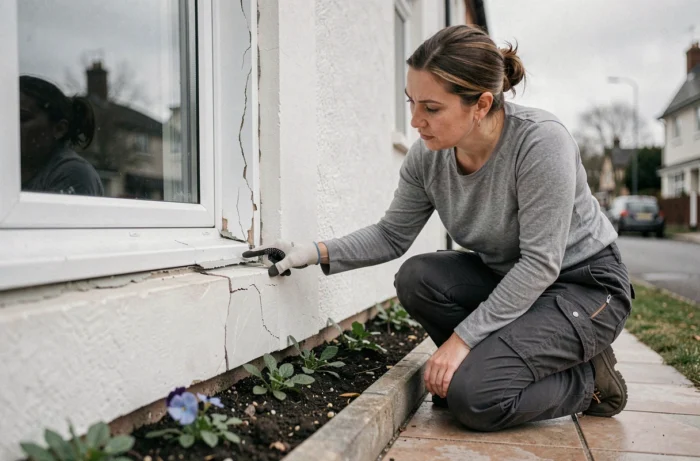
New silicone does not adhere to old silicone. This is the source of most joints that peel off a few months after a quick “repair.” The residual silicone film prevents any adhesion, even with an identical product.
The only reliable method is to completely remove the old bead (cutter, joint scraper), then clean the surface with a solvent that removes greasy residues. On PVC, a specific cleaner prevents scratching or tarnishing the profile.
Once the surface is clean and dry, you have a choice: reapply neutral silicone (if you do not need to paint) or switch to MS polymer (if you want more versatility).
Which product to choose based on your specific situation
- Exposed exterior joint, no painting planned: neutral silicone specially designed for carpentry. It is the most durable product against UV and weather on PVC.
- Interior or exterior joint to be painted: hybrid MS polymer sealant. It combines adhesion on PVC, lasting flexibility, and paint compatibility.
- Decorative interior joint (around the window on the room side): acrylic sealant. Easy to smooth, paintable, economical, but reserved for dry and low-stress areas.
- Renovating an old joint: regardless of the product chosen, mechanically remove the old joint and degrease the surface before any new application.
The choice between silicone and sealant for a PVC window ultimately depends on three parameters: the exposure of the joint (interior or facade), the need to paint, and the condition of the existing substrate. Neutral silicone remains the reference for longevity outdoors. The MS polymer takes the advantage as soon as versatility or finish matters as much as pure sealing.