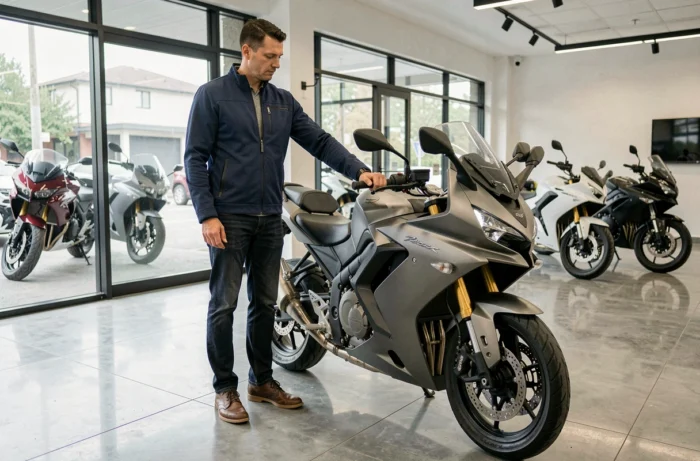
The Yamaha R1 is no longer a road bike in Europe. Since the tightening of the Euro 5+ standard, Yamaha has chosen to withdraw the R1 from road homologation, confining it to track use. This withdrawal profoundly changes the landscape of high-displacement sportbikes and forces riders attached to this segment to rethink their options.
The R1 Race Base: a niche product that does not replace anything on the road
The most common misunderstanding concerns the R1 Race Base, still listed in Yamaha’s catalog. This version remains in production, but exclusively for track use. In Spain, it can no longer be registered: no homologated lights, no mirrors, no road instrumentation.
The distribution method reinforces this niche logic. Orders go through pre-reservation rounds (first wave in September 2026 for deliveries scheduled in February 2027). This quota system resembles more the purchase of a competition car than that of a production motorcycle.
For a rider who used to ride an R1 daily or during road trips, the Race Base is not an alternative. It is a different product, intended for a different use. Before choosing a replacement for the R1, it is essential to clarify what one is looking for: a road-legal sportbike, a versatile machine with a track focus, or a compromise between the two.
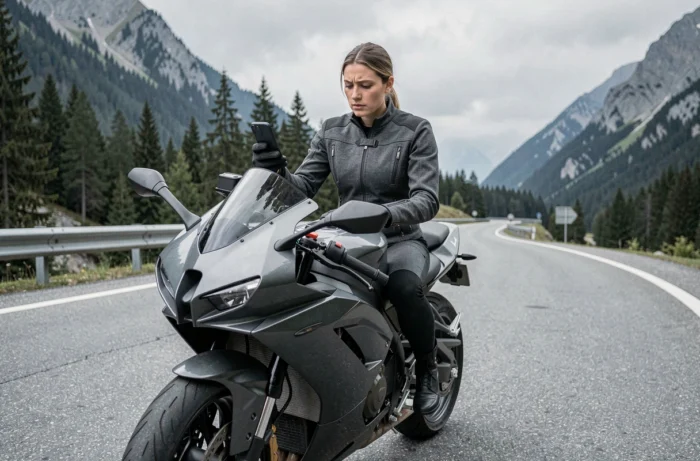
Euro 5+ homologated sportbikes: which motorcycles remain on the market
Where Yamaha has chosen to exit the road segment, other manufacturers have absorbed the regulatory cost of Euro 5+ to keep their hypersport models in the catalog. The result is a limited but still active market, dominated by three main references.
BMW S 1000 RR
This is the most frequently cited direct competitor. Its inline four-cylinder engine delivers power comparable to that of the R1, with one of the most comprehensive electronic systems in the segment. ABS, traction control, engine modes, and semi-active suspension (optional M) make it a machine as comfortable on the track as on the road.
The S 1000 RR remains homologated and available at dealerships, which is its main advantage over the current R1. Field feedback varies on the quality of its ergonomics compared to that of the Yamaha, but its versatility is undisputed.
Kawasaki Ninja ZX-10R
Kawasaki has kept the ZX-10R in the European catalog, including the anniversary version. Its engine delivers generous torque in mid-range, making it more usable on the road than it appears on paper. The ABS braking system and inverted fork are part of the standard equipment.
However, the onboard electronics remain a step behind what BMW or Honda offer in this segment. For predominantly road use with occasional track outings, this gap has little practical consequence.
Honda CBR1000RR-R Fireblade
The Fireblade targets the top of the segment with an engine directly inspired by competition. Its price positioning is the highest of the trio, but the quality of construction and precision of the chassis justify this orientation for demanding riders.
Technical criteria for comparing an alternative to the Yamaha R1
Comparing sportbikes solely on engine power makes little sense when all exceed what a rider can exploit on the road. The criteria that make the difference in everyday use lie elsewhere.
- Quality of the electronic system: engine modes, anti-wheelie, launch control, quickshifter. The finesse of calibration matters more than the number of available modes
- Weight fully fueled: a few kilograms difference between two models changes maneuverability in cornering and fatigue on long rides
- Type of fork and suspension system: an adjustable inverted fork allows adapting the motorcycle to its rider’s size and level, which is not the case with a fixed suspension
- Availability of parts and dealer network: a motorcycle whose fairing or ABS braking kit can be ordered in three days does not have the same cost of use as a model with parts imported over several weeks
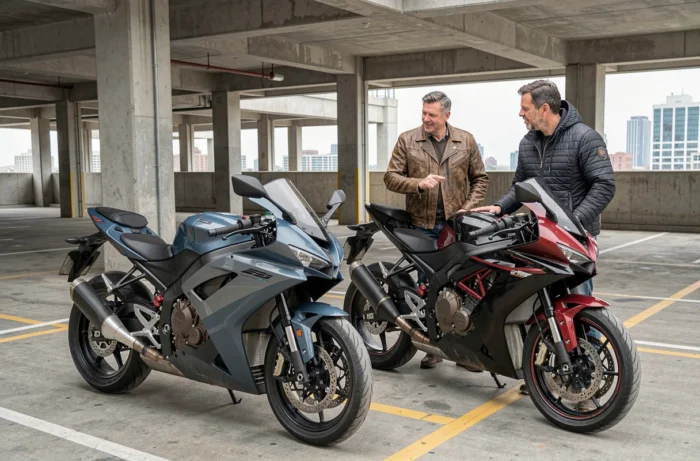
Yamaha R1 used market: a still viable option
The withdrawal of the R1 from the new road market has mechanically tightened the used market. Road-legal models (pre-2025 generations) retain their appeal, and prices reflect this growing rarity.
Buying a used R1 remains an option, provided that the maintenance history and the condition of the crossplane engine are checked, as its longevity heavily depends on adhering to maintenance intervals. A well-maintained used model retains most of the dynamic qualities that have made the machine’s reputation.
The available data do not allow for conclusions about price evolution in the medium term. The current trend shows sustained demand, but the sportbike market remains sensitive to regulatory changes and new homologations.
The segment of road hypersport motorcycles is undergoing a period of restructuring. The exit of the R1 from the homologated market reflects an industrial arbitration in the face of the cost of Euro 5+ compliance. For riders looking to replace their Yamaha, the choice depends less on the technical sheet than on actual use, whether on the road, track, or both. Alternatives exist, but none replicate exactly the balance that the R1 offered in its road version.