
Garlic manure is often presented as a formidable natural insecticide. The reality is more nuanced: garlic primarily acts as a repellent rather than an eradication product. Its sulfur compounds disrupt pests, disorient them, but do not eliminate them radically. Understanding this distinction changes the way one prepares, doses, and applies this type of treatment in the garden or vegetable patch.
Repellent mechanism of garlic: what sulfur compounds really do to insects
Allicin, a molecule released when crushing or chopping a garlic clove, is responsible for the characteristic smell of the preparation. This volatile substance acts on the olfactory system of insects. Aphids, spider mites, certain mites, and even rodents detect these emissions and move away from them.
The effect is therefore primarily deterrent. Spraying garlic manure on infested foliage does not cause the immediate death of pests. It creates a hostile environment that drives insects to migrate to other areas. This action remains temporary: the sulfur compounds degrade under the effect of sunlight and rain, necessitating regular applications.
The fungicidal properties of garlic are also documented. The decoction is recommended against peach leaf curl, powdery mildew, and downy mildew, as well as to limit damping-off of seedlings. Again, this is a preventive or gentle curative action, not a radical treatment. Those looking to find out how to make homemade garlic manure benefit from integrating this preventive logic from the start.
Homemade garlic manure recipe: cold maceration and improved variants
The confusion between manure, decoction, and oil maceration often arises. Manure results from prolonged maceration in cold water. Decoction involves cooking. Oil maceration incorporates vegetable oil for more targeted use. These three preparations have neither the same concentration nor the same use.
Classic cold maceration
The base is simple: crushed garlic cloves soaked in non-chlorinated water for several days. Rainwater is preferable, as the chlorine in tap water hinders the release of active compounds. If not available, let tap water sit for a few days before use.
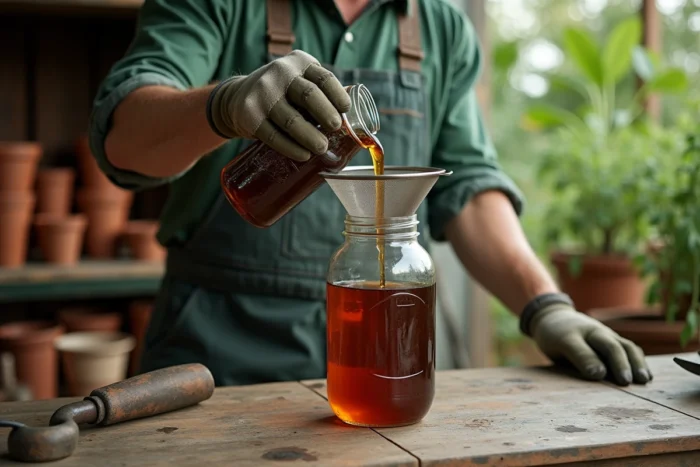
The mixture should be stirred daily. Fermentation is complete when the liquid no longer produces bubbles on the surface. Then filter through a fine cloth or a tight sieve before storing in an opaque container.
Variants with black soap or vegetable oil
The current trend leans towards improved recipes. Adding a small amount of liquid black soap improves adherence to foliage, which prolongs the repellent effect after spraying. Some gardeners also incorporate vegetable oil (rapeseed, sunflower) to strengthen the protective film on infested leaves.
Neem oil also appears in more elaborate variants. These mixtures combine the repellent effect of garlic with the insect-repelling properties of neem. Field reports vary on this point: some report increased effectiveness against aphids, while others notice no significant difference compared to garlic manure alone.
Spraying in the garden: the timing of application changes everything
Spraying in the evening or very early in the morning is not a trivial detail. In full sunlight, the preparation dries too quickly on the foliage, reducing contact time with insects. Worse, droplets can cause leaf burns through a magnifying effect.
Applying at the end of the day has a double advantage. The active compounds remain on the leaves longer due to the nighttime humidity. And most pollinating insects (bees, bumblebees) are less active at these times, limiting collateral damage to beneficial wildlife.
Some guidelines for spraying:
- Treat both sides of the leaves, as aphids and mites often hide on the underside, sheltered
- Renew the application after each rain, as water quickly washes away the sulfur compounds
- Space treatments about a week apart during periods of high pest pressure, without exceeding several consecutive applications on the same plant

Rotating methods and limits of garlic manure as a sole solution
Relying exclusively on garlic manure exposes one to disappointments. Effectiveness decreases if pests become accustomed to a single olfactory stimulus. Several sources now recommend varying solutions from one season to another, or even combining several strategies within the same growing cycle.
Associating with companion plants (mint, wormwood, tansy) strengthens the olfactory barrier around the vegetable patch. Manually collecting larger insects (Colorado potato beetles, stink bugs) complements the repellent action of the manure. Insect netting, particularly used in Quebec on cabbage and carrot crops, offers physical protection that manure alone cannot provide.
Diatomaceous earth also plays a role against certain crawling pests. Its mode of action (mechanical, through abrasion of the cuticle) differs entirely from that of garlic, making the combination relevant.
- Garlic manure as a preventive on foliage, renewed regularly
- Insect nets on the most sensitive crops (cabbage, leeks)
- Companion plants to create a permanent olfactory confusion
- Manual collection in case of localized infestation
This framework aligns with current regulatory logic. Synthetic pesticides are banned for individuals, prompting the structuring of a protection strategy rather than seeking a miracle product. Garlic manure is a link in this chain, not the entire chain.
Storage of garlic manure and common mistakes
Poorly stored garlic manure loses its properties within a few days. Storing it in an opaque container, away from heat and direct light, extends its usability. A tinted glass container or a food-grade plastic canister is suitable.
Never use unfiltered manure for spraying: solid residues clog the sprayer nozzles and create deposits on the leaves that encourage mold development. Another common mistake is overdosing the preparation in the belief that it will increase effectiveness. Overly concentrated manure burns young shoots and disrupts soil microorganisms.
Garlic manure is not a fertilizer. It does not provide significant nutrients to plants, unlike nettle or comfrey manure. Using it as a substitute for a fertilizing input would be a logical error in cultivation. Its function remains defensive: to repel pests, slow down fungal diseases, and protect foliage. Nothing more, but this is already a valuable role in a garden managed without chemicals.