When looking to follow pop culture in 2026, one encounters a concrete paradox: streaming platforms are multiplying catalogs, creators are producing more than ever, but real visibility is concentrated on a handful of names and formats. Understanding current trends in pop culture first means identifying where audiences are moving and why certain discoveries go under the radar.
Pop Culture Content Creators: Franchises, Not Just Posts
For a long time, creators were reduced to their subscriber counts. The IAB report published in September 2026 describes a shift in the model: creators are now designing intellectual properties that circulate across social networks, YouTube, connected television, cinema, and physical events.
Specifically, a videographer launching a recurring series on YouTube can adapt it into a podcast, a livestream, and then a physical tour. This is no longer influence; it’s franchise production. And it reshuffles the cards among traditional players in film, series, and music.
This dynamic can be seen on portals like fuzzunivers.fr, which aggregate news and pop culture discoveries by intersecting these different formats. The creator becomes the producer of their own franchise, and the media must adapt to this reality.
Creator Compensation: The Hidden Side of Music and Video Streaming
The proliferation of pop culture content on streaming platforms creates an impression of abundance. Opinions vary on this point, but an analysis from the Journal d’un progressiste published in September 2026 presents a clear finding: out of 11 million creators on streaming platforms, only 52,600 had earned over $10,000 in royalties in 2023.
Cultural visibility does not guarantee sustainable income. An artist can accumulate millions of streams without earning a decent salary. This gap affects both music and video, and it explains why many creators are turning to hybrid models: merchandising, in-person events, paid exclusive content.
For fans of films, series, or music, this means that the artists discovered on Netflix or on a playlist may not necessarily make a living from those broadcasts. Following pop culture news also means understanding this imbalanced economy that shapes what is offered to us on screen.
Pop Culture Off-Screen: The Anti-Algorithmic Shift
We spend hours scrolling through algorithmic recommendations on video and music platforms. According to Musically (September-October 2026), an underlying trend is emerging: pop culture is shifting towards offline and anti-algorithmic experiences.
In practice, this takes several forms:
- Physical events designed by creators, with their own ticketing and programming independent of platforms
- Festivals that blend art, video games, cinema, and music in one location, without digital mediation
- In-person book or viewing clubs that recreate social connections around series, films, or books
This movement responds to a measurable fatigue: audiences want discoveries that an algorithm would not have selected for them. In France, this dynamic is reflected in the proliferation of hybrid cultural events where cinema, live music, and interactive installations intersect.
Generative AI and Pop Culture: What Changes for Films, Series, and Games
Generative artificial intelligence is not confined to laboratories. It is already changing the production and distribution conditions in cinema, music, and video games. The topic is divisive, but the concrete effects are evident.
AI tools are used to generate visual assets for games, to produce temporary soundtracks for series, or to create dubbing in multiple languages. For the viewer or player, the difference is not always perceptible. For creators, it’s a matter of profession and compensation.
The debate in France revolves around cultural exception: how to protect artists’ rights when an AI can replicate a musical or visual style in seconds? The tension between adapting to the immersive market and defending this cultural exception remains an open issue for the entire sector.
Pop Culture Trends 2026: What Truly Deserves Attention
Rather than listing twenty ephemeral micro-trends, we can isolate movements that have a real impact on what we watch, listen to, and play:
- The long format is regaining ground: videos longer than twenty minutes on YouTube, limited series in eight episodes, narrative podcasts spanning multiple seasons. Snack content is no longer enough to retain audiences
- Book adaptations into series continue to dominate Netflix and other platforms’ catalogs, with a premium on already established universes (fantasy, thriller, true crime)
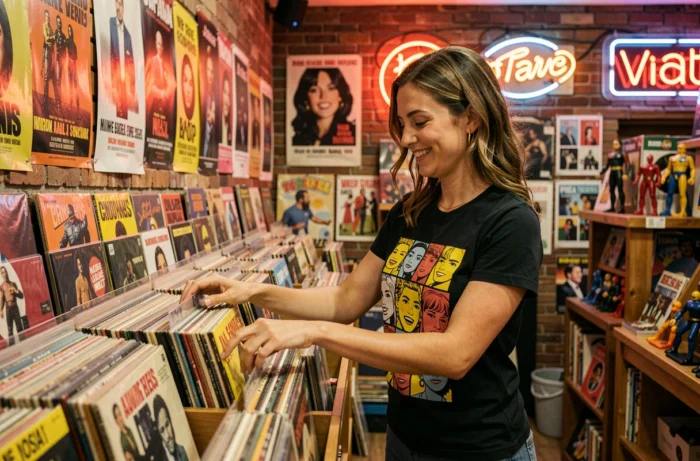
- Nostalgia remains a powerful lever: the return of 80s aesthetics, the revival of Old Hollywood style, and references to classic cinema permeate both fashion and music videos
- Narrative video games are gaining cultural recognition, treated as standalone works in the press and festivals
Each of these trends reflects a need for grounding. Audiences are seeking content that lasts, tells a story, and exists outside of an algorithmic flow.
The pop culture of 2026 is not just a calendar of releases on streaming platforms. It is built in the tension between digital overproduction and the quest for uniqueness. The creators who are thriving are those who master multiple formats, multiple channels, and know how to engage with their audience outside of screens. This is likely the only constant in such a fluid cultural landscape.