The cameras mounted above red lights do not all fall under the same legal or technical framework. Confusing a traffic management sensor, a video-verbalization camera, and an automatic crossing radar can lead to unpleasant surprises regarding the fine notice, or conversely, contesting a ticket on an inappropriate basis.
Technical chain of observation: automatic radar vs. video-verbalization
An automatic red light radar (approved device type CA-FR) operates autonomously. Two sensors buried in the roadway, upstream and downstream of the line of effect, detect the passage of the vehicle after the light turns red. The system then triggers two timestamped photos, one at the crossing of the line, the other confirming the vehicle’s progression into the intersection. The ticket is automatically generated by the National Processing Center (CNT) in Rennes, without human intervention at the time of the observation.
Video-verbalization relies on a different mechanism. The images from the surveillance cameras are transmitted in real-time to the Urban Supervision Center (CSU). A sworn agent observes the infraction live, records the license plate, and writes an electronic ticket. No flash, no dedicated ground sensor. The fine notice arrives by mail with the same financial consequences and impact on the license, but the evidentiary framework differs significantly.
Understanding the exact nature of the camera above a red light conditions the contestation strategy: one does not challenge an automatic radar ticket with the same arguments as a video-verbalization ticket.
Driver identification: the blind spot of the red light radar
The automatic radar photographs the rear license plate of the vehicle. The holder of the registration certificate receives the fine, not necessarily the driver. If another person was driving, the holder can designate the actual driver via the exemption request form within 45 days following the notice’s dispatch.
In video-verbalization, the situation is similar on paper: the ticket is sent to the holder of the registration certificate. The difference lies in the quality of the image. High-definition urban cameras sometimes capture the driver’s face, complicating a contestation based on the lack of identification.
We observe a frequent confusion: some drivers believe that the absence of a flash means there is no ticketing. Video-verbalization devices do not produce any visible flash. The infraction is recorded silently, and the notice arrives several days later.
Penalties for running a red light: fines, points, and license
Running a red light constitutes a 4th class offense. The applicable penalties are the same, whether the observation comes from an automatic radar, video-verbalization, or a direct interception by law enforcement.
- Fixed fine, reduced for prompt payment, increased for delays beyond the legal timeframe
- Points deducted from the driver’s license, applicable as soon as the ticket becomes final (payment or absence of contestation within the deadlines)
- Administrative suspension of the license possible in case of recidivism or aggravating circumstances (excessive speed at the crossing, endangering others)
Passing a yellow light is treated differently. Article R412-31 of the traffic code requires stopping at a yellow light, unless the vehicle cannot stop safely. Red light radars only activate when the light turns red. However, video-verbalization can penalize a crossing at a yellow light if the agent observes that stopping was possible.
Challenging a red light ticket: real levers
Contesting a fine for running a red light requires precisely identifying the device that generated the ticket. The fine notice mentions the mode of observation (automated system or recorded by an agent).
For an automatic radar, the points of contestation focus on technical aspects:
- Lack of approval or periodic verification of the radar (absence or expiration of the compliance certificate)
- Absence of regulatory signage upstream of the device
- Inconsistency in the photos (timestamp, readability of the plate, phase of the light at the time of crossing)
- Designation of another driver if the holder of the registration certificate was not driving
For video-verbalization, we recommend checking if the prefectural order authorizing video protection explicitly mentions the observation of traffic infractions. Article L.251-2 of the internal security code requires that this objective be included in the authorization. An order that only mentions the prevention of threats to the safety of individuals does not cover the ticketing of traffic code violations.
The contestation period begins from the dispatch of the notice. After this period, the fine is increased, and contestation becomes procedurally more burdensome.
Traffic sensors and cameras without repressive function
Not all visible boxes above a red light issue tickets. Virtual loop detectors, mounted on the traffic light mast, are used solely for traffic regulation. They count the waiting vehicles to adjust the duration of the light phases. Bus or tram priority sensors trigger the green light as a public transport vehicle approaches. None of these devices transmit exploitable images for ticketing.
The most reliable way to distinguish an active radar from a simple sensor remains the signage. Red light radars are indicated by a specific sign upstream of the intersection. Video-surveillance cameras used for video-verbalization must be publicly disclosed, usually with a pictogram of a camera.
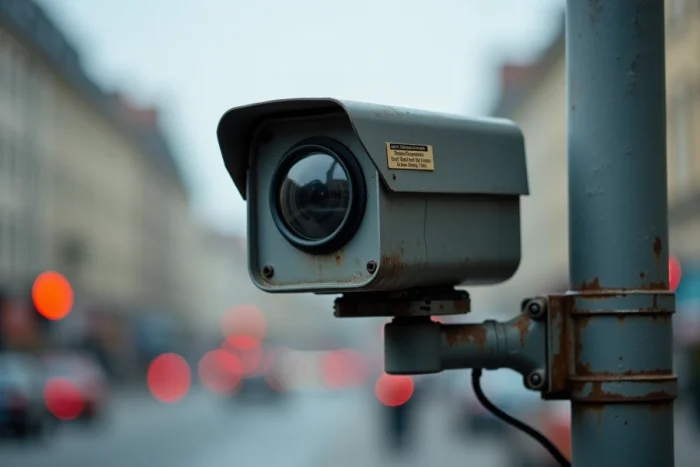
The absence of a sign does not guarantee the absence of ticketing, but it opens an additional lever for contestation before the public prosecutor.